Colour Polymorphism as an Indicator of Population Genetic Structure in Archachatina marginata from Southern Nigeria
DOI:
https://doi.org/10.83080/rejost.vol6no2.269Keywords:
Colour polymorphism, Archachatina marginata, Single Nucleotide Polymorphism (SNP), Mitochondrial DNA, Genetic diversity, Phylogenetic analysis, Gene flowAbstract
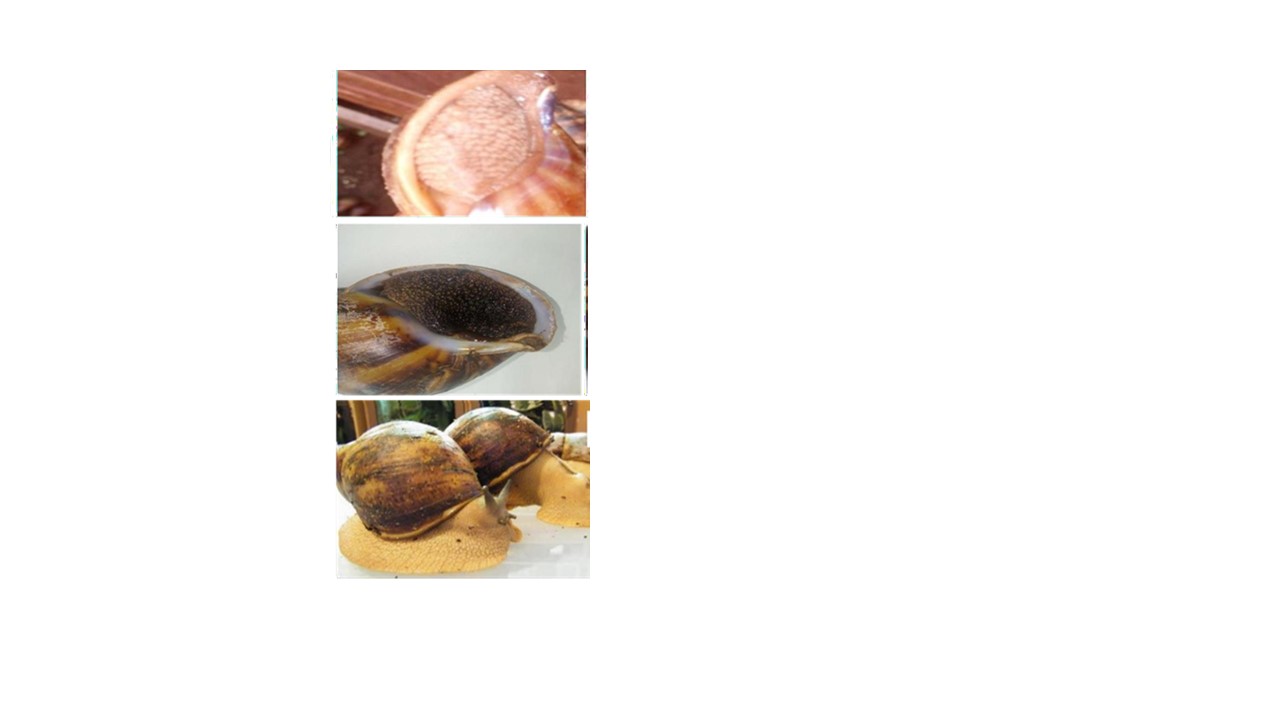
The present study was designed to investigate the phenomenon of color polymorphism in the genetic structure of the African snail species Archachatina marginata from Akwa Ibom, Cross River, and Rivers States in Nigeria. For this purpose, 48 adult snails were collected and analyzed, including 24 from each ecotype: 24 black-skinned (BS) and 24 white-skinned (WS), with 16 from each state. Genetic diversity was evaluated using mitochondrial cytochrome b and Single Nucleotide Polymorphism (SNP) markers. WS ecotypes were found to have formed a cohesive group with minimal genetic divergence (0.04-0.10), suggesting recent maternal ancestry and high gene flow. On the other hand, BS ecotypes were found to have high genetic diversity with certain lineages (CYT_12 and CYT_15) showing deep divergence (0.45-0.63). Genetic divergence between WS and BS ecotypes was found to be moderate (0.470). Phylogenetic tree results showed that the mitochondrial DNA formed three major clusters with mixed color morphs. Haplotype diversity was found to be high in both ecotypes: BS (1.000) and WS (0.968), while nucleotide diversity was found to be moderate. These findings suggest that colour polymorphism in A. marginata snails is actually a phenotypic variation in a genetically linked population rather than genetic ecotypes. However, the limitations of the study include the low number of samples and the use of only mitochondrial markers. Future studies should include a larger population and geographic distribution of the samples and use nuclear markers to reveal the genetic basis and evolutionary implications of colour polymorphism in A. marginata snails.
References
Afolayan, C. O. & Awodiran, M. O. (2015). Genetic differentiation of A. marginata populations from three vegetation zones using Random Amplified Polymorphic DNA Polymerase Chain Reaction. Notulae Scientia Biologicae. 7(3):372-381.
Etukudo, O. M., Okon, B., Ekaluo, U. B. & Ibom, L. A. (2016). Genetic differentiation between black-skinned and white-skinned ectotypes of giant African land snails (A. marginata) in Calabar, Nigeria. Global Journal of Pure and Applied Sciences. 22: 135-139.
Etukudo, O. M. (2017). Genetic diversity of giant African land snails using Inter Simple Sequence Repeat (ISSR) markers. Ph.D. Thesis, Department of Genetics and Biotechnology, University of Calabar, Calabar, Nigeria. Pp.120.
Etukudo, O. M., Asuquo, B. O., Ekaluo, U. B., Okon, B. Ekerette, E. E., Umoyen, A. I., Udensi, O. U., Ibom, L. A., Afiukwa, A. C. & Igwe, D. O. (2018). Evaluation of Genetic Diversity in Giant African Land Snails Using Inter Simple Sequence Repeats (ISSR) Markers. Asian Journal of Advances in Agricultural Research. 7(2): 1-13.
Etukudo, O. M., & Okon, B. (2025). Phenotypic landscape of giant African land snails. Computing and Applied Sciences Impact. 2(1): 1–12.
Eze, J. N., Daisy, E., Akpodiete, O. J. & Okonkwo, J. C. (2010). Feeding Pattern, Carcass and Shell qualities of Snails (Archachatina marginata) Fed Different Material. Journal of Innovative Research in Engineering and Science. 1 (1): 111 – 121.
Galeotti, P., Rubolini, D., Dunn, P. O., & Fasola, M. (2003). Colour polymorphism in birds; causes and functions. Journal of Evolutionary Biology. 16(4): 635-646.
Gonzalez, D. R. (2020). Colour polymorphism in the terrestrial snail Cepaea nemoralis: from genetics and genomics to spectroscopy and deep learning. A PhD Thesis submitted to the University of Nottingham, Pp. 256.
Gupta, N. (2019). DNA extraction and Polymerase Chain Reaction. Journal of Cytology. 36(2): 116-117.
Ibom, L. A., Patani, I., Okon, B., & Okon, F. I. (2016). Phenotypic Variations in reproductive traits of two strains of Archachtina marginata snails (VAr. Ovum and Var. Saturalis) and their crosses. Proceeding of the 5th annual international conference/workshop on Giant African land snails NetGals. June 5-9, 2016. Pp. 36 – 42.
Inemotimineri, P., Ogundu, U. E., Okoro, V. M. O. & Kadurumba, O. E. (2023). Evaluation of Mutation Type Associated with SNPs of Black Skinned and White Skinned Snails (Archachatina marginata) in the Rainforest Zone of Nigeria. International Journal of Innovative Science and Research Technology. 8(12): 1013-1018.
Inemotimineri, P., Etukudo, O. M., Dudutari, P. E. & Kingsley, D. D. (2025). Reproductive Traits Variability in Black-Skinned and White-Skinned Archachatina marginata. Acta Scientific Veterinary Sciences. 7(8): 68-75.
Koichiro, T., Glen, S., Daniel, P., Alan, F. & Sudhir, K. (2013). MEGA6: Molecular evolutionary Genetics analysis version 6.0. Molecular Biology and Evolution. 30:2725-2729.
Liew, T. S., Schilthuizen, M. & Lakim, M. (2010). The determinants of land snail diversity along a tropical elevational gradient: insularity, geometry and niches. Journal of Biogeography. 37: 1071–1078.
Odeh, M. O., Aikpokpodion, P. O. & Brisibe, E. A. (2015). Molecular characterization of giant African land snails using PCR-RAPD DNA fingerprinting. Animal Molecular Breeding, 5(1):1-8.
Okon, B. & Ibom, L. A. (2012). Snails breeding and snailery management. Calabar: Freshdew Publication. p.90.
Okon, B., Ibom, L. A., Williams, M. E. & Ekong, N. B. (2012). Effects of breed on reproductive Efficiency of two most popular snails (A. marginata (S) and A. achatina(L)) in Nigeria. Journal of Agricultural Science. 4(8):236-245.
Okon B., Ibom, L. A., & Njume, G. N. (2013). Genetic differentiation between the black-skinned and white-skinned snails (Archachatina marginata) using random amplified polymorphic DNAs. African Journal of Biotechnology. 12(12), 5035-5039.
Mckinnon, J. S., & Pierotti, M. E. R. (2010). Colour polymorphism and correlated characters: genetic mechanisms and evolution. Molecular Ecology. 19:5101-5125.
Uboh, F. E., Ebong, P. E., & Mbi, E. (2010). Cultural discrimination in the consumption of black snail (A. marginata) and white snail (A. achatina); Any scientific justification? International Research Journal of Microbiology. 1:13-17.
Wright, S. (1949). The general structure of populations. Ann Eugenics. 15: 323-354.
Downloads
Published
How to Cite
Issue
Section
License
Copyright (c) 2026 Researchers Journal of Science and Technology

This work is licensed under a Creative Commons Attribution-NonCommercial-NoDerivatives 4.0 International License.
Unless a different licence is clearly indicated for a particular article, articles published in the journal are made available under the Creative Commons Attribution 4.0 International (CC BY 4.0) licence. This licence permits others to read, download, copy, distribute, share, adapt, and build upon the published work, including for commercial purposes, provided that appropriate credit is given to the original author(s), the article is properly cited, and any changes made to the original work are clearly indicated.