Determination of Antioxidant Activity of Methanolic Leaf Extract of Emilia sonchifolia and its Effect on the Lipid Profile of Wistar Rats
DOI:
https://doi.org/10.83080/rejost.vol6no2.265Keywords:
Emilia sonchifolia, Antioxidant activity, Lipid profile, Wistar rats, PhytochemicalsAbstract
Aim: This study investigated the methanolic extract of Emilia sonchifolia leaves to provide a scientific basis for its ethnobotanical applications and to evaluate its impact on lipid profile parameters in Wistar rats.
Method: Pulverized leaves were macerated in 99.8% methanol for 72 hours, filtered, and concentrated via rotary evaporation at 40°C. The crude extract was partitioned exhaustively using a 1:3 extract-to-solvent ratio with hexane, dichloromethane (DCM), ethyl acetate, and n-butanol. Antioxidant capacity was assessed using Ferric Reducing Antioxidant Power (FRAP) and DPPH assays, alongside spectrophotometric quantification of total phenolic and flavonoid content. For the in vivo study, 24 Wistar rats were divided into four groups (n=6). Group 1 (control) received normal saline, while Groups 2–4 received incremental daily oral doses (500, 1000, and 1500 mg/kg) of the extract for 14 days. On day 15, serum was collected via cardiac puncture. Total cholesterol (TC), triglycerides (TG), and high-density lipoprotein (HDL) were measured calorimetrically, while LDL and VLDL were calculated using the Friedewald formula.
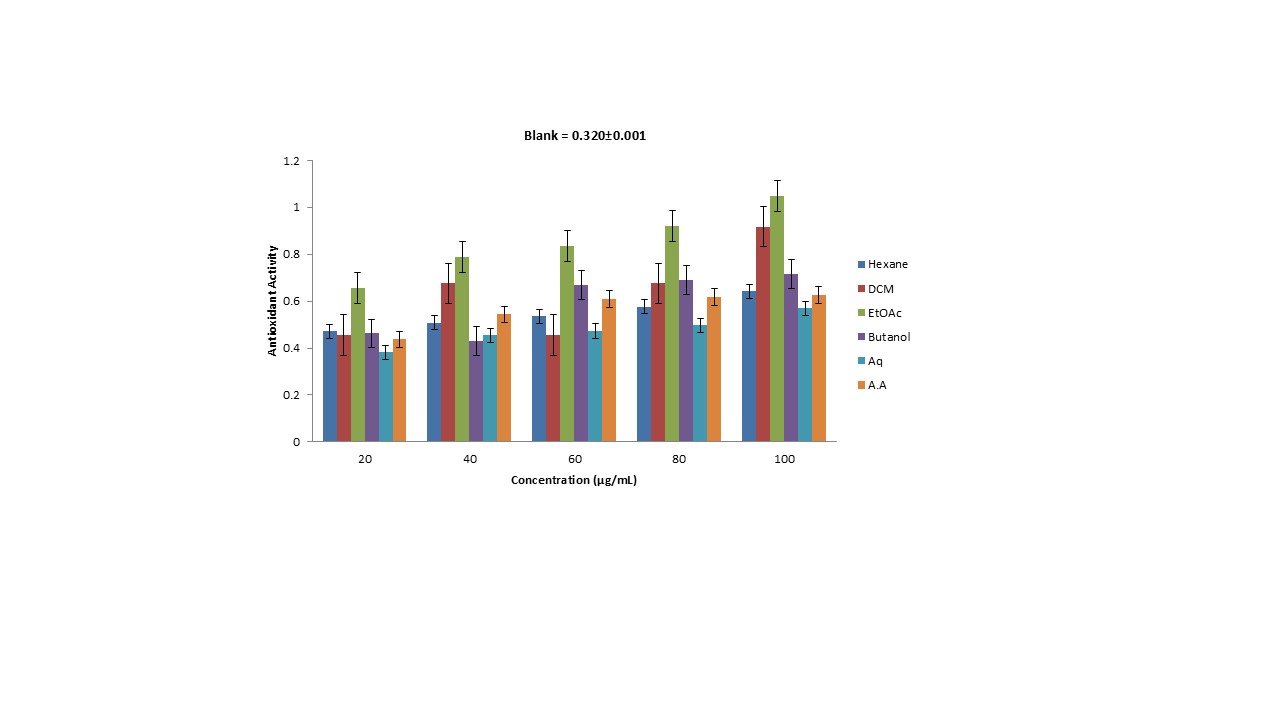
Results: Phytochemical screening confirmed the presence of flavonoids, tannins, saponins, alkaloids, and cardiac glycosides. The extraction process yielded 82.02g of crude extract (17.45% w/w). The Ethyl acetate and DCM fractions exhibited the highest antioxidant activities, with results comparable to standard Ascorbic Acid. Lipid profile analysis indicated no significant differences (p > 0.05) in TC, TG, HDL, or VLDL levels. However, a highly significant increase in Low-Density Lipoprotein (LDL) was observed (p < 0.01) across all treated groups compared to the control.
Conclusion: While the potent antioxidant capacity of Emilia sonchifolia validates its traditional use in managing oxidative-related ailments, the significant elevation of LDL levels (p < 0.01) highlights a critical metabolic safety concern. These findings suggest that the plant may adversely modulate lipid homeostasis, which could potentially increase cardiovascular risk. Therefore, despite its therapeutic benefits, caution is recommended in its medicinal and dietary consumption.
References
Ajen, M., Ogar, I., Ele, E., Ugor, J. & Egbung, G. (2022). Comparative studies on the effect of quercetin and Emilia sonchifolia leaf extract on lipid profile of cadmium induced male Wistar rats. Journal of Complementary and Alternative Medical Research, 18(2), 11–19.
Anju, V. S. & Sreeja, S. (2010). In vitro estrogenic activities of fenugreek Trigonella foenum graecum seeds. Indian Journal of Medical Research, 131, 814-819.
Bonoli, M., Verardo, V. & Marconi, E. (2004). Antioxidant phenols in barley (Hordeum vulgare L.) flour: Comparative spectrophotometric study among extraction methods of free and bound phenolic. Journal of Agricultural and Food Chemistry, 52(16), 5195–5200.
Brighente, I. M., Dias, M., Verdi, L. G. & Pizzolatti, M. G. (2006). Antioxidant activity and total phenolic content of some Brazilian species. Pharmaceutical Biology, 45(2), 156-161.
Cichon, N., Saluk-Bijak, J., Gorniak, L., Przyslo, L. & Bijak, M. (2020). Flavonoids as a natural enhancer of neuroplasticity—An overview of the mechanism of neurorestorative action. Antioxidants, 9(11), 1035.
Dash, S., Clarke, G., Berka, M. & Jacka, F. N. (2015). The gut microbiome and diet in psychiatry: focus on depression. Current Opinion in Psychiatry, 28(1), 1-6.
Devi, G. D., Lija, Y., Cibin, T. R., Biju, P. G., Devi, G. V. & Annie, A. (2006). Evaluation of the protective effects of Emilia sonchifolia Linn. (DC.) on perchlorate-induced oxidative damage. Journal of Biological Sciences, 6, 887-892.
Duangjai, T., Areeya, T., Apinan, P. & Aujana, Y. (2018). Flavonoids and other phenolic compounds from medicinal plants for pharmaceutical and medical aspects: An overview. Medicines, 5(3), 93.
Edagha, I. A., Edem, D. O., Akpan, H. D., Usoro, I. F. & Edagha, E. I. (2021). Blood glucose concentration, pancreatic histology and insulin–expression following metformin and glibenclamide administration in diabetic rats. Journal of Morphological Sciences, 38, 38-43.
Ekpo, F. E., Uffia, I. D., Udo, E. S. & Udofia, O. E. (2012). Comparative study of nutrients and anti-nutrients content in domestic and wild leaves of Gnetum africanum (afang, okazi). International Journal of Biology, Pharmacy and Allied Sciences, 1, 1608-1617.
Emmanuel, A., Ugo, M., Godwin, N. & Malachy, I. O. (2020). Monkeypox virus in Nigeria: Infection biology, epidemiology, and evolution. Viruses, 12(11), 1257.
Evans, W. C. & Trease, G. E. (2002). Pharmacognosy (15th ed.). W.B. Saunders.
Friedewald, W. T., Levy, R. I. & Fredrickson, D. S. (1972). Estimation of the concentration of low-density lipoprotein cholesterol in plasma, without use of the preparative ultracentrifuge. Clinical Chemistry, 18, 499–502.
Idiong, O. J., Okokon, J. E. & Andrew, U. E. (2012). Antiinflammatory and analgesic activities of Heinsia crinata. Molecular and Clinical Pharmacology, 3(1), 30-39.
Kaisoon, O., Siriamornpun, S. & Weerapreeyakul, N. (2011). Phenolic compounds and antioxidant activities of edible flowers from Thailand. Journal of Functional Foods, 3(2), 88-99.
Kylli, P., Rodriguez-Carpena, J. G., Morcuende, D., Andrade, M. & Estevez, M. (2011). Avocado (Persea americana Mill) phenolic, in vitro antioxidant and antimicrobial activities and inhibition of lipid and protein oxidation in porcine patties. Journal of Agricultural and Food Chemistry, 59(10), 5625-5635.
Neethu, V. & Gangaprasad, A. (2018). Preliminary phytochemical screening and antioxidant activity of Emilia sonchifolia (L.). International Journal of Research and Analytical Reviews, 5(4), 2348–1269.
Nemudzivhadi, V. & Masoko, P. (2014). In vitro assessment of cytotoxicity, antioxidant, and anti-inflammatory activities of Ricinus communis (Euphorbiaceae) leaf extracts. Evidence-Based Complementary and Alternative Medicine, 2014, Article ID 625961.
OECD. (2001). OECD guideline for testing of chemicals: Acute oral toxicity – up-and-down-procedure (UDP). OECD Publishing.
Oyaizu, M. (1986). Studies on product of browning reaction prepared from glucose amine. Journal of Japan Society of Nutrition, 44, 307–315.
Sahnoun, Z., Jamoussi, K. & Zeghal, K. M. (1997). Free radicals and antioxidants: human physiology, pathology and therapeutic aspects. Thérapie, 52(4), 251–270.
Shekhar, C. T. & Anju, G. (2014). Antioxidant activity by DPPH radical scavenging method of Ageratum conyzoides Linn. leaves. American Journal of Ethnomedicine, 1(4), 244-249.
Sofowora, A. (1993). Medicinal plants and traditional medicine in Africa (2nd ed.). Spectrum Books Ltd.
Udo, A., Ekott, M., Ekanem, E. I., Iklaki, C., Udofia, O. & Udoma, E. (2009). Incidence of ectopic pregnancy in Calabar, Nigeria: two halves of the last decade compared. Global Journal of Community Medicine, 2(1-2), 27-32.
Udofia, O. E. (2024). Effects of methanol root extract of Homalium letestui on oxidative stress markers and histology of livers and kidneys of Wistar rats. Journal of Science and Technology Research, 6(2), 69-82.
Udofia, O. E., Nwafor, P. A., Uffia, I. D. & Nya, E. (2023). Aphrodisiac potentials of methanol extract of Homalium letestui root in male rats. International Journal of Biochemistry Research & Review, 32(5), 68-78.
Uffia, I. D., Akachuku, C. O., Udofia, O. E. & Nsien, I. B. (2021). Meteorological influences on some melliferous plant species. Global Journal of Pure and Applied Sciences, 27(4), 361-366.
Uffia, I. D., Udofia, O. E. & Udofia, C. S. (2024). Study of potential effect and health benefits of soaking time on the nutritional composition and some anti-nutrient factors in cowpea (Vigna unguiculata). Communication in Physical Sciences, 11(3), 429-437.
Uffia, I. D., Udofia, O. E., Bassey, M. E., Esen, R. O., Egong, E. J. & Akan, O. D. (2025). Comparative analysis of proximate and anti-fungal activities on palm oil treated ash extracts of Musa sapientum and Musa paradisiaca peels. Journal of Applied Sciences and Environmental Management, 29(1), 4207-4212.
Downloads
Published
How to Cite
Issue
Section
License
Copyright (c) 2026 Researchers Journal of Science and Technology

This work is licensed under a Creative Commons Attribution-NonCommercial-NoDerivatives 4.0 International License.
Unless a different licence is clearly indicated for a particular article, articles published in the journal are made available under the Creative Commons Attribution 4.0 International (CC BY 4.0) licence. This licence permits others to read, download, copy, distribute, share, adapt, and build upon the published work, including for commercial purposes, provided that appropriate credit is given to the original author(s), the article is properly cited, and any changes made to the original work are clearly indicated.